Saturday, 3 March 2012

= Coldplay =


In lecture this week we discussed three types of Christian bands and/or musicians. I could not help but think of where to place my favorite band, Coldplay. Coldplay is know to have come from a Christian background and include Christian elements in many of their songs, but their purpose if purely musical. Coldplay is certainly a transformationist band, interested in music as music, but include the praise and struggle with God in many of their lyrics. In their new album Mylo Xyloto, almost all of their songs have direct or symbolic religious lyrics. For example, “Us Against the World,” begins with the lyric: “Oh morning come bursting, the clouds, Amen.” The song, about a couple struggling to make their relationship work, includes the element of temptation by the devil: “the devil as he's talking with those angel's eyes”. The song also has direct reference to the Biblical story of Daniel and the lions den [Daniel 6].  

Coldplay has also been a proud advocator of Oxfam in support of fair trade, for over six years. Chris Martin, the bands lead vocalist, often wears the Make Trade Fair symbol of an equal sign on his hand to public events, in music videos, and at their concerts. The band has also written “Make Trade Fair” or “MTF” on the side of their piano while on tour, promoting the program at each show.


This year, Martin has been sporting the Oxfam symbol as a patch on his shirt, over his heart. 
Below are photos from Coldplay's music video for "Every Teardrop is a Waterfall," and the 2012 Grammy performance with Rihanna:


Martin, a spokesperson for Oxfam, went to Ghana in 2005, and created a video to the tune of his band’s song “What If”. The video, part of the Make Trade Fair campaign, highlights the importance of fair trade to fight against poverty and hunger. 
Some could argue Martin is promoting his band since the video is to the tune of a Coldplay song, however, I do not feel particularly suspicious of Martin’s sincerity.

What do you think of the Coldplay/Chris Martin's sincerity?


Saturday, 4 February 2012

Response to Andreia's " Sporting 'gods' "


An athlete is an amazing marketing tool. As you said, sport superstars are idolized by their fans. Many devote themselves to a team and/or player, believing in them team through thick and thin. These athletes are loved so much that fans just simply have to have whatever they are endorsing. A great example is Tom Brady’s “TB12” hat. 
Tom Brady, New England Patriot’s Quarter Back, and my sport “god” was seen wearing a hat with a logo that combines his initials TB and his jersey number 12. Patriot fans went wild, we had to have that hat! The desire for the hat grew even stronger when Mark Wahlberg wore the TB12 hat on an episode of Entourage that featured both himself and Tom Brady.


It turned out that Brady was only wearing the hat to promote his website tombrady.com and the hat would not be sold to the public. That didn’t stop any fans, however, as many had the hat replicated. Fans will go through great lengths to support their favorite athlete. Wearing a hat devoted to Brady, was the ultimate piece of clothing for any Patriot fan.

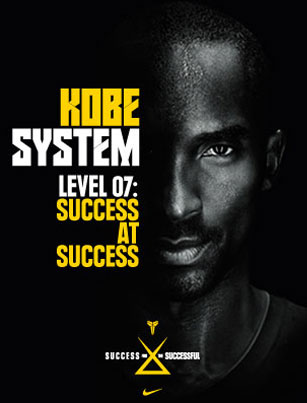
Companies are well aware of the commitment fans feel toward athletes, and like the TB12 hat, have created clothing lines dedicated to one player. Nike is probably the greatest example. Nike has sponsored tennis “god”, Rodger Federer’s own clothing line, and who could ever forget Jordans, after the great Michael Jordan, which are still popular today. Among the many other athletes Nike sponsors, the commercial ads for Kobe Bryant’s new Nike line Kobe VII System, have become viral. In my favorite ad, there is absolutely no mention of the product itself, instead this pull advertisement intrigues the consumer, and the acting skills of Kobe and Kanye West add a comedic touch. 
If you’re wondering why Kanye West would be in a Nike commercial, you may be surprised to know that Nike also sponsors West. Nike has created “Air Yezzy”, taking the rappers nick-name. In other words, Nike created a shoe devoted to a non-athlete! Ultimately, companies realize the profit made by having an idol’s name on a piece of clothing.

Here's a link to the Kobe/Kanye Commercial: http://www.youtube.com/watch?v=DqEJbfwr32M

Friday, 3 February 2012

The Religion of Sport


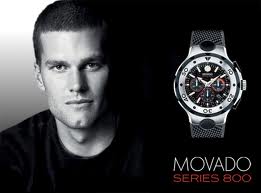
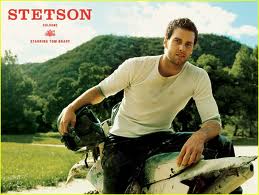
In lecture this week we looked at advertisements that use large profile sport figures to sell products. What was special about these advertisements was the way in which they used the sport figures to resemble Christ. For example, the Nike ad with Lebron James in a Christ-like pose and the slogan “we are all witnesses” can make a few Christians uneasy. However, we have to realize that these figures are Christ-like. For any die-hard sports fan, like myself, the dedication to sport is much like a religion, and the greatest athletes on the team are often seen as a Messiah. As a classmate pointed out in lecture, Lebron James was Cleveland's Messiah - they were a terrible team before he arrived, and just as bad when he left. He single-handedly lead the team; he was God-like, a miracle even. It is also important to realize that sport figures do not only have ads to sell athletic related products. Tom Brady, my favorite superstar in the world of sports, has done ads for Stetson cologne, UGG for men, and Movado watches. These advertisements do not highlight the fact that he is even a football player! Why? Because advertisers realize his face and name alone will make his fan base curious about the product. Even I’ve wondered what Stetson smells like after I saw Brady’s ad. A fan’s dedication can be so great that they will try and buy anything they see his or her favorite player endorsing.  


Sport figures are an amazing marketing tool. After all, almost every season of Dancing with the Stars features an NFL superstar. In the second last season, Heins Ward, Pittsburgh Steelers megastar, won the competition, and for anyone who watched, the in-house audience was not short of terrible-towels (a yellow rally towel associated with the Steelers), Ward even waved one in one of his dances. When Ward was asked to comment on his performance on the show he shouted “Steelers Nation!” and raised his arm to show a black and yellow Steelers rubber bracelet he was wearing. Undoubtedly, Ward got a few extra votes from the Steeler Nation that night.
Ultimately, sport superstars do not need to be depicted as Christ-like figures in ads for one to realize religion is already intertwined with sports. Dedication to a team or one athlete alone can boost sales for a product a player endorses, or increase a shows ratings because of the appearance of a sport superstar. Religious elements in sport advertisements are just playing on the fact that these players and teams already have a huge fan base who would call themselves disciples. I think it’s much more interesting to focus less on how companies use religion in marketing techniques for athletes, and spend more time on athletes who believe Christ himself is helping their team win like Tim Tebow. 


Sunday, 29 January 2012

Response to Jessica's post "The Cult of Gaga"


I really love that you brought up pop icons from the past, Madonna in particular! As we all know, Madonna was no angel. Many have criticized her for her explicit songs, skimpy outfits, and what some call anti-Christian behavior. Sound familiar? The racy attributes ascribed to the “Material Girl”, have left many comparing Lady Gaga to the Queen of Pop.

Madonna’s revealing clothing of the 80’s left little to the imagination, and the rosary and crosses she hung around her neck or wore as earrings, made some Christians uncomfortable. Her music videos were no different. Her videos were under much scrutiny, especially Like a Prayer, which features a black Jesus. Many claimed Like a Prayer to be sacrilegious and even an act of heresy!
Just as you mentioned about Gaga, many wondered if Madonna was sending positive messages to teens. Even in recent years Madonna has gotten herself into controversy. On her Confession tour in 2006, Madonna’s crucifix scene sprung much debate. Her concert was to be released live on air and the Catholic League urged NBC to edit that section out of the special. Madonna spoke out against the attack:
"This is not a mocking of the church," she said. "It is no different than a person wearing a cross or 'taking up the cross' as it says in the Bible. My performance is neither anti-Christian, sacrilegious or blasphemous. Rather, it is my plea to the audience to encourage mankind to help one another and to see the world as a unified whole. I believe in my heart that if Jesus were alive today he would be doing the same thing." *
NBC did not include the controversial scene.


In 2010, Madonna sparked controversy again 
as she holds a crucifix to her mouth in a seductive pose.

To address your question of inappropriate material in the media, I think children and teens are definitely exposed to a lot, especially with the access of the internet. However, with the example of Madonna, breaking and questioning norms is seen even before our generation. After all, Rock ‘N Roll was associated with rebellious teens and sexual innuendo. Material deemed inappropriate in the media needs to be embraced not feared. I think parents and educators should discuss inappropriate material with children to gain greater knowledge. My question is, what did NBC prove by not showing Madonna’s crucifix scene? Did it really make a difference? 
* “NBC: Debating Madonna crucifix scene,” USA Today, http://www.usatoday.com/life/television/news/2006-09-21-NBC-madonna-debate_x.htm

Wednesday, 25 January 2012

I'm a bad kid and I'll survive!


In lecture yesterday we discussed the infamous Lady Gaga and the controversy swirling around her, as many Christians find her music and videos offensive. As we studied her video for “Bad Romance”, the class pointed out the obvious Christian references such as the crosses on the coffin-like cases that hold the “monsters”, and her crossing herself before she dances. These images seem to contradict the video’s nudity and sexual implications, leaving many Christians suspicious of Gaga’s intent. Some religious people find her “dangerous” to society since she certainly is not scared of challenging any norms. The lyrics to the song, however, do not quite seem to fit the video. The lyrics speak to the theme of unconditional love - “I want your everything, as long as its free; I want your love.” Certainly unconditional love can be considered a positive in the Christian faith.
In class the idea of her own religion was mentioned in regard to her group of “monsters” and her self-proclaimed leader, “Mother Monster”. I think it is fair to say Gaga definitely provides religious functions through her music. She has created a community for not only fans, but her dedicated “monsters” too. She provides meaning through her song lyrics such as unconditional love and inclusivity throughout her work. Her song Bad Kids off her latest album, Born This Way, is a great example. In the song she describes the “bad kids” as unemployed, degenerates, selfish punks, and the like, but reassures them that they are all accepted: “Don’t be insecure if your heart is pure. You’re still good to me if you’re a bad kid, baby”. Gaga’s unquestionable love and respect to all those considered “bad kids” or outsiders is not only seen through her music. She has even begun her own advocacy group to stop bullying and empower youth, which will be officially launched on February 29.
I invite you all to join her movement at: http://www.BornThisWayFoundation.org/
Check out the lyrics to Lady Gaga's, Bad Kids: http://www.ladygaga.com/lyrics/default.aspx?tid=23592559