Friday, 30 March 2012

Sex Education


As a member of UofT’s Concurrent Teacher Education Program, this week’s lecture prompted reflection on my role as a future teacher…

            Sex education is a very heated topic in secondary schools. Although there seems to be an overwhelming belief that sex education is a necessity, many are divided on what should be taught. The division is even among educators themselves as some argue abstinence should be the only option discussed in sex education classes, while others promote content full sex education, including human development, gender roles, relationships, and intimacy. I would agree that comprehensive sexual education is most beneficial and stressing abstinence alone is irrelevant and ignores the reality that teens are having sex unsafely and sometimes in unhealthy relationships.


 Educators must be aware of the impact of the media. Teens are bombarded with images of sex everywhere. Whether its lyrics of songs they hear on the radio, advertisements they see all around them, shows they enjoy on television, or sex based magazines like Cosmopolitan and Men’s Health, they are all exposed to sex. Even fiction written for teens like the popular Twilight series deals with sexuality and describes abstinence as only desirable for an ancient vampire; completely ‘old fashion’. 


The media does not only promote sex, but it often neglects healthy relationships. The Internet alone, providing links to pornography, famous celebrity sex tapes, and the like, further promotes teens to have sex. The Internet, however, also provides positive websites, one being AVERT. AVERT, a site dedicated to HIV & AIDS, also presents positive information about sex education. It contains a section on sex and relationships, which I believe is especially beneficially for teens. It also provides games and quizzes where one can test their sex education knowledge, and has a blog section where teens can share sex related experiences or thoughts.


            To argue that students and educators should ignore and hide from sex is baffling. Schools need to come to terms with the reality of the day and use this media to guide and empower today’s youth. 

Saturday, 10 March 2012

Response to: "Violence in sports: Necessary?"


I agree, hockey would be just as exciting without the “mini-boxing matches”. There is no necessity for full-fledged fistfights in hockey. However, taking out checking in hockey would change the sport completely. Hockey is a contact sport, and even though many “clean” hits result in serious injuries, I can’t throw blame on the NHL for “preserving hitting”.
Comparing hockey to football, football is much more physical and hard-hitting, but should a player throw one punch against someone on the opposing team, they are immediately ejected from the game. Using the NFL as an example, I believe hockey would be just as successful with a ban on fighting. As you could see, fighting does not sell, as the NFL is a more profitable league than the NHL. So then, if the most physical sport does not condone fighting yet rake in more profit than the NHL, violence in the form of fighting is not necessary from a business perspective.
Also, I do not agree with your comment about the extent of violence in the NHL. You cannot compare Armstrong’s broken nose, from a fight that he chose to engage in, to Steve Moore’s career ending injury from a sucker-punch from behind (not a fight he mutually agreed to). These examples of violence are polar opposites. In no way did Tod Bertuzzi lay such a cheap shot to “advance his career”. The Bertuzzi-Moore hit is a clear example of the impossibility of complete violence being taken out of hockey. Fist fighting can be easily banned, but hits both legal and illegal are simply part of the game. The games fast pace and natural contact will lead to legal and illegal hits whether they are purposeful or not. 

Here is the link to the blog I am responding to: http://faithisourmedium.blogspot.com/2012/03/violence-in-sports-necessary.html

McCoy: Lion or Lamb?


            This past season of the NFL was marked by a nasty controversy over Cleveland Brown’s quarterback Colt McCoy. In a game against the Pittsburgh Steelers, Steeler’s linebacker James Harrison launched himself at McCoy. Having watched the game live, my initial reaction to the hit was the unquestionable feeling that McCoy was concussed and would be removed from the game. After the hit McCoy lay still on the field, and needed assistance to get to the sideline. McCoy was replaced for two plays by the back-up quarterback, but was then found healthy to play and put back into the game only to throw an interception. After the game, McCoy was diagnosed with “concussion like symptoms”, however, after further medial examination, he was found to have a mild concussion.
McCoy’s father, infuriated at the Brown’s medical staff for allowing his son to get back on the field was quoted the day after the hit saying:

"I talked to Colt this morning and he said, 'Dad, I don't know what happened, but I know I lost the game. I know I let the team down. What happened?' …He was basically out (cold) after the hit. You could tell by the rigidity of his body as he was laying there. There were a lot of easy symptoms that should've told them he had a concussion. He was nauseated and he didn't know who he was. From what I could see, they didn't test him for a concussion on the sidelines. They looked at his hand."

Pat Shurmur, Brown’s head coach, defended his medical team, saying medical precautions were taken and McCoy told the staff he was perfectly fine to play.

The Colt McCoy concussion controversy raises several issues. First off, the fact that the trained professional medical staff cleared him to get back in the game questions the extent to which health is more important than a win. Secondly, if McCoy’s father’s account is accurate, stating that Colt felt “he let the team down”, highlights the belief in sports of playing through injury as heroic, rather than threatening. Lastly, the concussion raises issues of injury prevention. Harrison, who laid the hard hit on McCoy, was suspended for 1 game without pay, losing $73,529. Many believed the hit to be in the ‘gray area’ of what defines an illegal hit.


After watching the hit in the above link, you will be shocked at the thought that the staff allowed him to get back in the game. What do you think of the medical staff’s decision? Also, what do you think of the Harrison suspension?

Saturday, 3 March 2012

Response to Valdy's Post: Christian Apps… “There’s an App for That”


I have to admit, after reading your post I really thought “There’s an app for that?!”  I guess I really shouldn’t be shocked that there are Christian/Catholic apps, but the price is certainly surprising!
To respond to your question, I’m very skeptic of Surgework’s authenticity and sincerity. It’s very hard to be empathetic towards a company that has their apps at 20x the price of others! But, as you’ve pointed out, we are in a “commercial consumer culture structured around capitalism” so could you really lay any blame of authenticity? 
Your post also reminded me of Unilever, who has been under some scrutiny for their ‘hypocritical’ advertising. Unilever is a corporation that oversees a variety of food, home, and personal care brands such as Lipton, Knorr, Dove, Axe, and Sunlight. Their hypocritical image began with the two extreme advertising campaigns of Dove and Axe. Dove, a brand targeted at women, advocates for inner or “real” beauty, and self-esteem for young girls. Axe, on the other hand, is targeted for men, with a branding slogan of “The Axe Effect” or my interpretation: the ‘chick’ magnet. The television commercials really highlight the hypocrisy of each brand’s identity:
Dove commercial: http://www.youtube.com/watch?v=Ei6JvK0W60I

Axe commercial: http://www.youtube.com/watch?v=I9tWZB7OUSU
- Axe Models -
Are they really promoting self-esteem when the Axe commercials feature model-type women in bikinis? It seems that they are using the “whatever sells” principle. Even though all signs point to a false sincerity, I can’t really place any blame. They are part of a capitalist consumer culture, and have to appeal to their targeted consumers, after all, it is all part of ‘the business’. Also, the Dove self-esteem campaign for young girls has actually tried to make a real difference! They have gone to many schools in the GTA advocating for “real” beauty, and I have only heard positive reviews. 
I wonder if we are being a bit too hard on companies? Maybe they really do mean well, and it is simple necessity to use different marketing strategies? On the other hand, maybe I’m just another casualty of Unilever’s master advertising plan? 
I think suspicion of a company’s sincerity is inevitable when there’s a profit to be made from their good will. 

= Coldplay =


In lecture this week we discussed three types of Christian bands and/or musicians. I could not help but think of where to place my favorite band, Coldplay. Coldplay is know to have come from a Christian background and include Christian elements in many of their songs, but their purpose if purely musical. Coldplay is certainly a transformationist band, interested in music as music, but include the praise and struggle with God in many of their lyrics. In their new album Mylo Xyloto, almost all of their songs have direct or symbolic religious lyrics. For example, “Us Against the World,” begins with the lyric: “Oh morning come bursting, the clouds, Amen.” The song, about a couple struggling to make their relationship work, includes the element of temptation by the devil: “the devil as he's talking with those angel's eyes”. The song also has direct reference to the Biblical story of Daniel and the lions den [Daniel 6].  

Coldplay has also been a proud advocator of Oxfam in support of fair trade, for over six years. Chris Martin, the bands lead vocalist, often wears the Make Trade Fair symbol of an equal sign on his hand to public events, in music videos, and at their concerts. The band has also written “Make Trade Fair” or “MTF” on the side of their piano while on tour, promoting the program at each show.


This year, Martin has been sporting the Oxfam symbol as a patch on his shirt, over his heart. 
Below are photos from Coldplay's music video for "Every Teardrop is a Waterfall," and the 2012 Grammy performance with Rihanna:


Martin, a spokesperson for Oxfam, went to Ghana in 2005, and created a video to the tune of his band’s song “What If”. The video, part of the Make Trade Fair campaign, highlights the importance of fair trade to fight against poverty and hunger. 
Some could argue Martin is promoting his band since the video is to the tune of a Coldplay song, however, I do not feel particularly suspicious of Martin’s sincerity.

What do you think of the Coldplay/Chris Martin's sincerity?


Saturday, 4 February 2012

Response to Andreia's " Sporting 'gods' "


An athlete is an amazing marketing tool. As you said, sport superstars are idolized by their fans. Many devote themselves to a team and/or player, believing in them team through thick and thin. These athletes are loved so much that fans just simply have to have whatever they are endorsing. A great example is Tom Brady’s “TB12” hat. 
Tom Brady, New England Patriot’s Quarter Back, and my sport “god” was seen wearing a hat with a logo that combines his initials TB and his jersey number 12. Patriot fans went wild, we had to have that hat! The desire for the hat grew even stronger when Mark Wahlberg wore the TB12 hat on an episode of Entourage that featured both himself and Tom Brady.


It turned out that Brady was only wearing the hat to promote his website tombrady.com and the hat would not be sold to the public. That didn’t stop any fans, however, as many had the hat replicated. Fans will go through great lengths to support their favorite athlete. Wearing a hat devoted to Brady, was the ultimate piece of clothing for any Patriot fan.

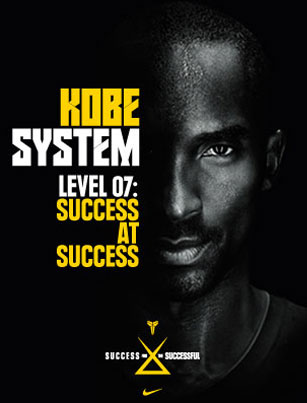
Companies are well aware of the commitment fans feel toward athletes, and like the TB12 hat, have created clothing lines dedicated to one player. Nike is probably the greatest example. Nike has sponsored tennis “god”, Rodger Federer’s own clothing line, and who could ever forget Jordans, after the great Michael Jordan, which are still popular today. Among the many other athletes Nike sponsors, the commercial ads for Kobe Bryant’s new Nike line Kobe VII System, have become viral. In my favorite ad, there is absolutely no mention of the product itself, instead this pull advertisement intrigues the consumer, and the acting skills of Kobe and Kanye West add a comedic touch. 
If you’re wondering why Kanye West would be in a Nike commercial, you may be surprised to know that Nike also sponsors West. Nike has created “Air Yezzy”, taking the rappers nick-name. In other words, Nike created a shoe devoted to a non-athlete! Ultimately, companies realize the profit made by having an idol’s name on a piece of clothing.

Here's a link to the Kobe/Kanye Commercial: http://www.youtube.com/watch?v=DqEJbfwr32M

Friday, 3 February 2012

The Religion of Sport


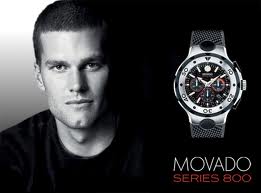
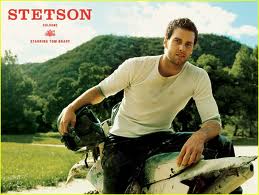
In lecture this week we looked at advertisements that use large profile sport figures to sell products. What was special about these advertisements was the way in which they used the sport figures to resemble Christ. For example, the Nike ad with Lebron James in a Christ-like pose and the slogan “we are all witnesses” can make a few Christians uneasy. However, we have to realize that these figures are Christ-like. For any die-hard sports fan, like myself, the dedication to sport is much like a religion, and the greatest athletes on the team are often seen as a Messiah. As a classmate pointed out in lecture, Lebron James was Cleveland's Messiah - they were a terrible team before he arrived, and just as bad when he left. He single-handedly lead the team; he was God-like, a miracle even. It is also important to realize that sport figures do not only have ads to sell athletic related products. Tom Brady, my favorite superstar in the world of sports, has done ads for Stetson cologne, UGG for men, and Movado watches. These advertisements do not highlight the fact that he is even a football player! Why? Because advertisers realize his face and name alone will make his fan base curious about the product. Even I’ve wondered what Stetson smells like after I saw Brady’s ad. A fan’s dedication can be so great that they will try and buy anything they see his or her favorite player endorsing.  


Sport figures are an amazing marketing tool. After all, almost every season of Dancing with the Stars features an NFL superstar. In the second last season, Heins Ward, Pittsburgh Steelers megastar, won the competition, and for anyone who watched, the in-house audience was not short of terrible-towels (a yellow rally towel associated with the Steelers), Ward even waved one in one of his dances. When Ward was asked to comment on his performance on the show he shouted “Steelers Nation!” and raised his arm to show a black and yellow Steelers rubber bracelet he was wearing. Undoubtedly, Ward got a few extra votes from the Steeler Nation that night.
Ultimately, sport superstars do not need to be depicted as Christ-like figures in ads for one to realize religion is already intertwined with sports. Dedication to a team or one athlete alone can boost sales for a product a player endorses, or increase a shows ratings because of the appearance of a sport superstar. Religious elements in sport advertisements are just playing on the fact that these players and teams already have a huge fan base who would call themselves disciples. I think it’s much more interesting to focus less on how companies use religion in marketing techniques for athletes, and spend more time on athletes who believe Christ himself is helping their team win like Tim Tebow.